
The Muslim market demonstrates blue ocean potential with an average annual growth rate of 7%-10%. The global halal cosmetics market reached $47.7 billion in 2024, while Chinese contractors secured over $100 billion in infrastructure projects. In core markets, Indonesia's 229 million Muslim population constitutes the main consumer base, Saudi Arabia’s "Vision 2030" drives infrastructure demands such as data centers, and Malaysia serves as the global hub for halal industry certification.
However, companies face three major barriers: certification barriers (Halal certification must cover raw materials, production, and packaging processes, with varying standards across countries, such as Indonesia’s "one country, one certificate" policy and the strict certification systems in the Middle East), cultural differences (work efficiency decreases by 50% during Ramadan, and daily five-time prayers affect scheduling), and legal risks (unauthorized use of religious symbols may lead to criminal charges).
Success Stories: From Certification Breakthroughs to Cultural Adaptation
Case 1: An AIMedical Company’s Certification Breakthrough
An AI medical company initially faced a trust crisis at a Middle Eastern medical exhibition due to lack of Halal certification. After obtaining certification, its intelligent diagnostic devices were included in local hospital procurement lists, and collaborative projects increased by 30% year-on-year. The key was opting for Malaysia’s JAKIM certification (recognized in 48 countries), avoiding redundant certification costs.
Case 2: A Cosmetics Brand’s Precise Cultural Outreach
Han Xizhen Cosmetics adjusted its product strategy for the Indonesian market: developing halal-compliant cushion products (avoiding porcine-derived ingredients) and launching TikTok live streams from 1 AM to 5 AM during Eid al-Fitr, aligning with Muslim consumers’ pre-dawn shopping habits, resulting in a 25% increase in conversion rates.
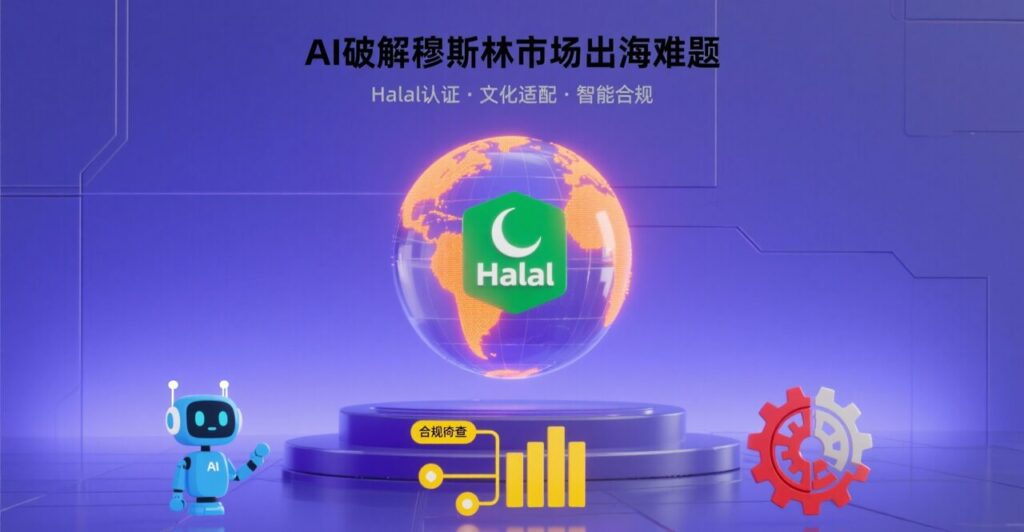
The Practical Value of AI Localization Tools
Under traditional localization models, companies face issues such as high translation costs (accounting for 25% of expenses) and delayed cultural adaptation. AI tools address these challenges through three core capabilities:
Smart Certification Assistance: Automatically verifies ingredient compliance and generates documentation meeting JAKIM standards, reducing certification cycles by 30%.
Content Cultural Adaptation: Optimizes multilingual copy using NLP technology, such as replacing religious symbols with natural landscape elements in Middle Eastern markets and adopting emotional expressions in Southeast Asian markets, increasing content acceptance by 40%.
Precise Channel Matching: Identifies golden time slots during Eid (1 AM–5 AM) through data analysis and leverages LnRu platform’s end-to-end automation tools to achieve a closed loop from "content creation–channel deployment–performance optimization," reducing trial-and-error costs by 50%.
Experience Review and Risk Mitigation
Success Factors: A trinity of certification (authoritative certifications like JAKIM), cultural adaptation (Ramadan operational adjustments), and technological empowerment (AI tools for cost reduction and efficiency improvement).