
When Meitu Inc.'s H1 2025 financial report revealed a 71.3% year-on-year growth in adjusted net profit, the industry once again turned its attention to the disruptive impact of AI technology on corporate globalization. This company, which started with image processing, achieved No. 1 rankings in App Store category charts in markets like Spain and Vietnam with its AI Agent product RoboNeo. Its productivity tools helped users reduce design costs by 90%, demonstrating AI's evolution from an "efficiency tool" to a "growth engine." As global competition enters a more intense phase, AI is becoming the core driver for Chinese companies to break through geographical barriers and reshape the global industrial landscape.
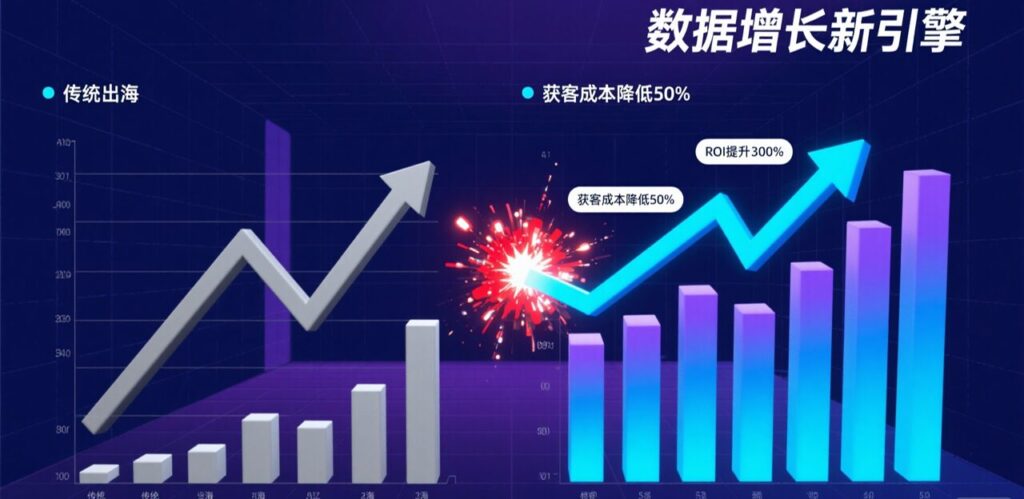
Technology Empowerment: From "Function Optimization"to "Ecosystem Reconstruction"
AI's value reconstruction for overseas-expanding companies is reflected in three dimensions:
Precision User Reach: By analyzing behavioral data from 280 million monthly active users, Meitu trained AI models adapted to different cultural aesthetics—optimizing "natural beauty" parameters for the Southeast Asian market and developing "hijab effects" compliant with religious customs for Middle Eastern users, enabling mass production of localized content. This capability increased RoboNeo's paid conversion rate in the Japanese market by 40% compared to the global average.
Full-Link Efficiency Improvement: From product design to market promotion, AI permeates the entire overseas expansion process. Yiwu clothing merchants using Meitu's AI tools in its design studio reduced product detail page production time from 3 days to 3 minutes; cross-border e-commerce sellers used AI to generate multilingual listings, lowering error rates from 18% with traditional translation to 0.3%.
Business Model Innovation: AI drives the transition from "product export" to "capability export." Meitu packaged its imaging AI technology as API services, empowering overseas small and medium-sized developers. This "technology export" model increased the revenue share of non-imaging businesses to 23%.
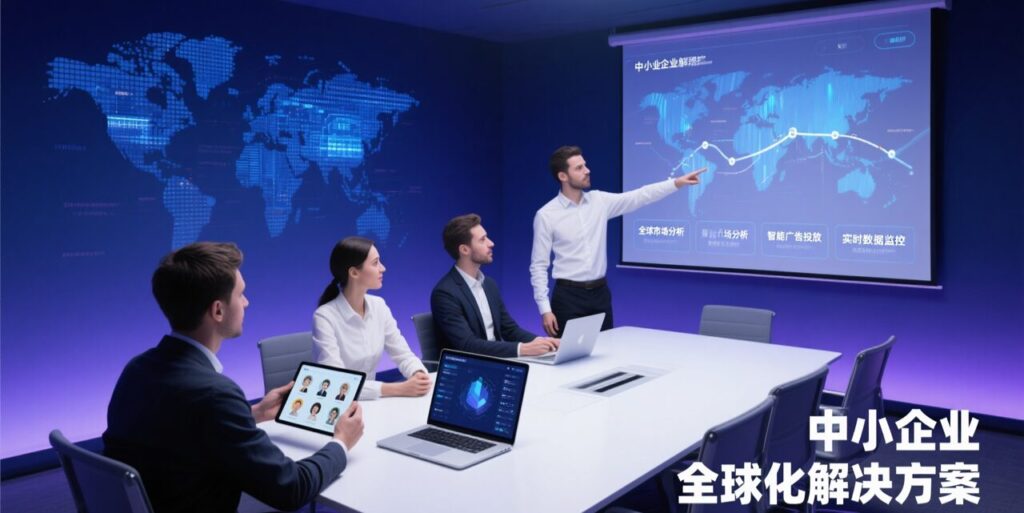
Globalization 2.0: The Breakthrough Path for SMEs
Although leading companies have validated the feasibility of AI-driven overseas expansion, SMEs still face three major challenges: high technology investment (over CNY 500,000 annually), scarcity of localized talent (hiring cycles for less common language talents exceed 3 months), and frequent compliance risks (data privacy regulation adaptation costs account for 25% of technology investment).
The key to breaking through lies in lightweight technology integration. Globalization promotion platforms like LnRu help SMEs reduce expansion costs through AI model-adapted translation and multi-channel traffic reach. Their core advantages include: industry-customized localized AI models achieving more accurate conversion than traditional machine translation, automatically adapting to different regional expression styles; integrating global mainstream search engines and partner site resources, automatically matching promotion channels based on product type—connecting industrial products to professional procurement platforms and consumer goods to local e-commerce alliances—achieving full-link automation from "translation-promotion-conversion."
In the Globalization 2.0 era, technology is no longer exclusive to a few giants. As AI lowers the barrier to overseas expansion from "million-level investment" to "lightweight deployment," the globalization dreams of SMEs are transforming from possibility into feasibility.